Screen Mirroring - TV Miracast
- 4.7
- Rating
- 10.00M
- Installs
- Free
- Price
 Analysis by App-foxy
I installed Screen Mirroring - TV Miracast when I wanted a straightforward way to move what was on my phone onto a larger screen. It is a free Tools app from Sooltr LLC, aimed at screen mirroring, live streams, and movies through compatible Roku, Chromecast, Fire TV, and other supported receivers. My first impression was that it is less about creating content and more about making an existing phone screen useful somewhere else.
That distinction matters. You are not opening a full smart-TV entertainment service with its own catalog. You are starting with something already on your Android device, then trying to hand that image and sound to a television or streaming receiver. In my experience, the appeal is strongest when I need a quick shared screen rather than a permanent media setup.
From phone screen to television: how the complete workflow feels
I find the most useful way to judge the full phone-to-TV workflow is to notice where the phone remains in charge and where the receiver takes over. That distinction helps me choose between mirroring a quick, mixed set of items and using a television’s own playback route for a longer session. The next section looks at how that choice affects shared use at home.
You May Also Like

 Blood Strike: 2.5 Anniversary
Blood Strike’s Loadouts Turn Every Drop Into a Tactical Gamble
A close look at Blood Strike’s custom loadouts: how fast access to signature weapons reshapes its battle royale rhythm, rewards preparation, and narrows the gap between fights.

 Pandora - Music & Podcasts
Pandora’s Music Is Easy to Start, but Harder to Recover
Pandora’s strength is its low-effort path from a seed to a station. Its weak spot is how much confidence it asks you to place in connection, setup, and quiet recovery.

 8 Ball Pool
 Is Built on Rivalries, Rematches, and Routine
A close look at the rivalries, rematches, shared routines, and unanswered safety questions that turn a quick pool match into a persistent mobile community.

 Samsung Music
’s Quiet Strength Is Playing What You Already Own
Its reach comes less from spectacle than from dependable access to a personal library. That simplicity is both the app’s strongest retention engine and its ceiling.

 AccuWeather: Weather Radar
AccuWeather Review: A Quick, Clear Forecast for Everyday Decisions
For everyday plans, the best forecast is the one you can understand quickly. AccuWeather makes rain timing, radar, and local conditions easy to act on, with a few trade-offs.

 Hill Climb Racing
Why Hill Climb Racing Still Turns Crashes Into One More Run
A tiny car, a bumpy hill and one more upgrade: Hill Climb Racing keeps resurfacing because its simple chaos makes every near-miss feel personal.
More From Our News Desk



Starting with the right kind of task
The most successful use begins with a clear reason to mirror. I used the app for situations such as showing photos to people in the same room, putting a mobile video on a television, or making a small screen easier for several people to see. Those are simple goals, but they reveal the app’s real value: it can turn a personal device into the starting point for a group viewing session.
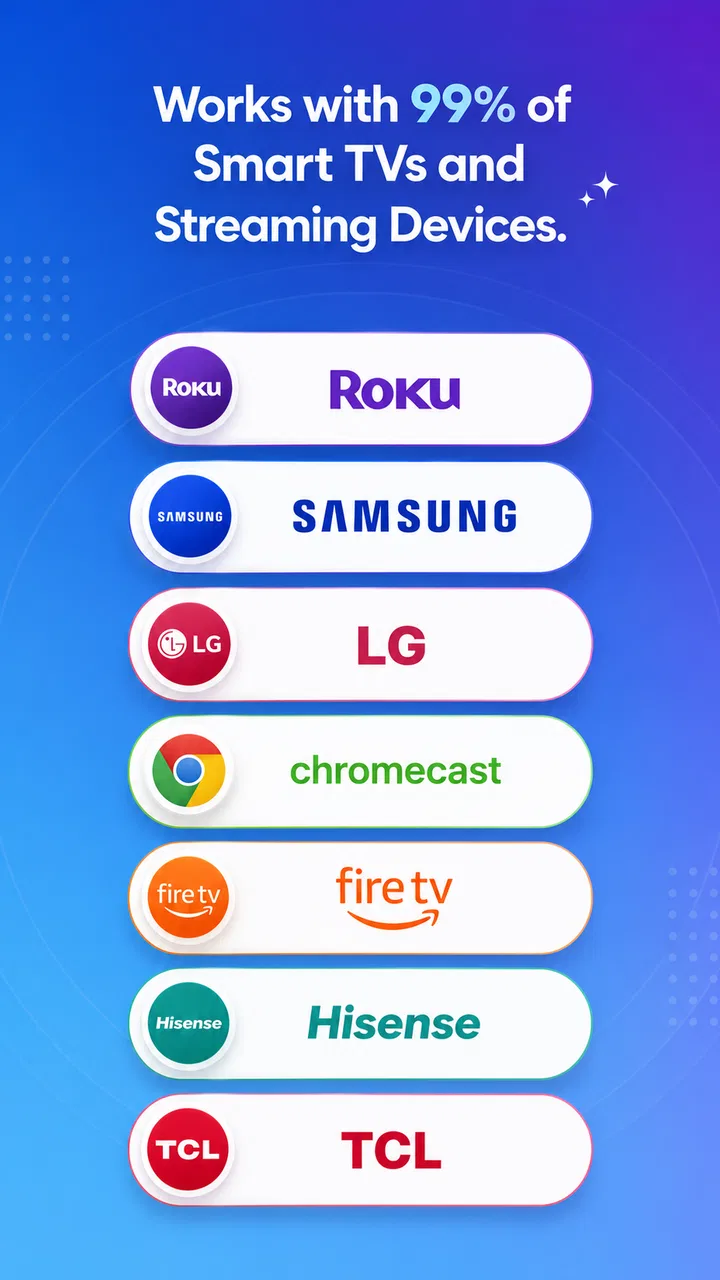
I would not begin with the assumption that every phone, television, or receiver will behave identically. Screen mirroring depends heavily on the devices involved, their connection, and how the receiving platform handles casting. The app supports several well-known destinations, including Roku, Chromecast, and Fire TV, but support on paper is not the same as a perfectly identical experience across all of them.
Before opening it, I make sure the phone and the receiver are ready for the same local connection. I also close anything private that I would not want displayed. This is an important practical habit because mirroring shows the phone screen itself, not just a carefully selected video window. Notifications, incoming messages, and accidental taps can become part of the presentation.
The first connection and device handoff
The basic flow is easy to understand: open the app, look for a compatible receiver, select the television or streaming device, and begin mirroring. The key handoff happens when the phone stops being the only screen and becomes a controller for the larger display. I found that this transition feels natural when the intended receiver is visible and ready, but less reassuring when several devices are nearby.
For a first attempt, I recommend keeping the phone close to the television and avoiding unnecessary network changes. If the receiver does not appear immediately, I would check the connection on both sides before repeatedly tapping the scan or connect controls. A patient restart of the app or receiver can be more useful than guessing at random settings.
Once connected, the phone becomes the source of the session. This is where the app is more flexible than opening a dedicated television application: whatever is suitable for display on the phone can potentially become part of the shared viewing experience. At the same time, that flexibility means the quality of the final result depends on the original app, the video, the network, and the receiving hardware.
Choosing what to show without losing control
For photos, the workflow is particularly understandable. I can open the gallery, move through images, and let the television follow along. This works well for an informal family moment because the phone remains in my hand while everyone else looks at the larger image. It is also useful for comparing pictures, explaining a visual detail, or showing a map or document when a few people need to see it together.
Video is a more complicated handoff. A video may look fine on the phone yet feel less smooth after mirroring, especially when the connection is busy or the source app is not designed for this kind of output. I treat mirroring as a convenient route for occasional viewing, not automatically as a replacement for a receiver’s dedicated app.
Live content brings another trade-off. The app can help put a live stream on a larger display, but live viewing is sensitive to delay and interruptions. If the purpose is a casual shared stream, a small delay may not matter. If I need tightly synchronized viewing, rapid interaction, or the best possible picture, the native television version of the service is usually the safer choice.
A realistic evening use case
Imagine a friend has taken a set of travel photos and wants to show them after dinner. Passing the phone around works, but it keeps the conversation focused on one small screen. With this app, I would connect the phone to the television, open the photos, and let the group watch while I move through them. I can pause on a detail, return to an earlier image, or switch to a map without asking everyone to crowd around the handset.
The handoff is useful because it preserves the phone’s role as an easy controller. I do not need to copy every image to a USB drive or create a separate presentation first. The friction appears when I receive a notification, rotate the phone unexpectedly, or open an unrelated screen. The larger display follows the phone, so a little preparation makes the session feel much more polished.
What happens after connection
When the link behaves well, the result is pleasantly direct: the television becomes a larger version of the phone’s current activity. That makes the app useful for spontaneous sharing, demonstrations, and media that is easier to find on a handset than through a television remote.
I especially like this approach for content that does not have a convenient television app. A saved image, a short clip, a webpage, or a visual reference can be shared without rebuilding the material elsewhere. That is one of the app’s less obvious strengths. Its value is not limited to movies; it can serve as a temporary bridge between a mobile workflow and a living-room screen.
There is also a practical distinction between mirroring and sending a file. With mirroring, the phone remains involved throughout the session. That means I can navigate and choose the next item immediately, but it also means the phone is occupied and its battery is being used while the display is active. For a long viewing session, that may be less convenient than handing playback to the television or receiver itself.
Where the flow can break
The first weak point is discovery. If the receiver is not detected, the experience stops before the useful part begins. This is not necessarily a flaw in one screen of the app; it is a reminder that mirroring is a chain. The phone, local connection, receiver, and source content all have to cooperate.
The second weak point is stability during movement. A still image can remain watchable even when the connection is not perfect, while fast video exposes interruptions much more quickly. I would therefore judge the app by the kind of material I plan to show. It is a better fit for occasional photos and casual demonstrations than for demanding, uninterrupted playback where every moment matters.
The third issue is privacy. Because the whole phone display can be visible, I would enable a quiet environment before connecting, silence distracting alerts where appropriate, and avoid opening banking, private messaging, or account screens during the session. This is not a reason to avoid the app; it is simply part of using screen mirroring responsibly.
Some content may also respond differently to mirroring. A source app can restrict external display behavior, alter playback, or produce a result that is less satisfying than its own receiver application. When that happens, I would stop troubleshooting the mirror and try the native app on Roku, Chromecast, Fire TV, or the television instead. A dedicated app is usually better when it is available and supports the exact service I want.
How it compares with the usual alternatives
The most obvious alternative is the casting or sharing control built into the phone or the individual media app. That route can be better for supported video because it may send playback directly to the receiver instead of continuously reproducing the entire phone screen. It can also leave the phone freer for other tasks.
Screen Mirroring - TV Miracast has a different advantage: it gives me one place to start when I want to show more than a single supported service. That makes it more useful for photos, demonstrations, mixed media, and content that does not expose its own cast button. The trade-off is that a general mirror can be less efficient than a purpose-built casting method.
Another alternative is a cable connection. A cable can be more predictable in some setups and may avoid wireless discovery problems, but it requires the right adapter and a physical connection between devices. The app is more convenient when I want to move around the room or avoid carrying extra hardware. If reliability is more important than convenience, a wired setup may still win.
Built-in screen sharing on a phone or television can also be a strong competitor. It may be faster when both devices come from the same ecosystem or already recognize each other. I see this app as most useful when I want a dedicated mirroring route across common receiver types, rather than when the operating system already provides a smoother, familiar connection.
Small habits that improve the handoff
My first useful habit is to prepare the source before connecting. I open the photo album, video, or page I intend to show, remove unrelated screens from the recent view, and check the phone’s orientation. This reduces the chance that the audience sees a distracting transition or a private notification.
My second habit is to test with a harmless image before starting the main material. A quick connection check tells me whether the intended receiver is actually selected and whether the display follows the phone. It is much less stressful to discover a problem before everyone is waiting.
My third habit is to use the receiver’s own application whenever the task is long and predictable. For a short demonstration, mirroring is wonderfully direct. For an extended film or live event, I prefer a method that lets the television handle playback when possible. That choice can reduce dependence on the phone and make the session easier to leave running.
A fourth insight is to treat the app as a presentation bridge rather than only a movie tool. I can use it to explain a phone setting, show a visual tutorial, compare product images, or walk someone through a mobile interface. Those situations are easy to overlook because the short description emphasizes entertainment, yet they are where full-screen mirroring can be more useful than ordinary casting.
Who will appreciate it most
I think this app suits people who regularly want to share phone content with a room but do not want to transfer files or search for a separate television solution every time. Families, casual presenters, travelers staying somewhere with a compatible receiver, and anyone who keeps useful material on a phone can all find a reason to use it.
It is also a sensible option for someone who values a simple starting point across Roku, Chromecast, Fire TV, and other supported destinations. The broad receiver focus gives it a practical role when the household uses more than one type of streaming hardware.
I would be more cautious if your main requirement is professional presentation, competitive gaming, high-quality long-form video, or perfectly synchronized live viewing. In those cases, a wired connection, a native receiver application, or the operating system’s built-in sharing feature may provide a better result. The app is convenient, but convenience should not be confused with guaranteed performance in every demanding situation.
Cost, maturity, and what to expect
The app is free to install and has an Everyone content rating, which makes it easy to try without committing money at the start. It has been available since early 2020, and the current version is 4.0.0.297. Its Android requirement is version 6.0 or later, so compatibility reaches back to many older devices while still covering a wide range of current phones.
There are in-app purchases ranging from $3.99 to $49.99 per item. I would look carefully at the purchase screen before confirming anything and decide whether the free experience already covers my occasional needs. For someone who mirrors only now and then, paying may not be necessary; a frequent user may judge any extra convenience differently.
The app’s popularity is substantial, with over ten million installs, around 574 thousand ratings, and roughly 9.5 thousand written reviews. It holds a 4.7 average, which suggests that many users find the general idea useful. I still would not treat that rating as a promise for a particular television, network, or source app. Mirroring has too many device-specific variables for a store score to replace a quick personal test.
My final take after following the whole route
Screen Mirroring - TV Miracast makes the most sense when the starting point is a phone and the desired outcome is a shared, larger view with minimal preparation. I like that it can connect everyday mobile content to common television receivers without requiring me to organize everything into a new library first.
The experience is strongest when I prepare the phone, use a stable connection, and choose content that does not demand flawless high-bandwidth playback. It is weaker when I expect it to behave exactly like a dedicated streaming application or when privacy and notification control are ignored.
My recommendation is simple: try it if you need a flexible bridge from Android phone to television, especially for photos, short videos, demonstrations, and occasional live viewing. Skip it in favor of a native casting option or cable when your priority is maximum stability, extended playback, or precise synchronization. For the right everyday workflow, this free Tools app is genuinely handy; its limits become clear only when the task asks more of mirroring than mirroring is designed to provide.
FAQs for Screen Mirroring - TV Miracast
01What is Screen Mirroring - TV Miracast, and what does it do?
Screen Mirroring - TV Miracast is designed to display the content from your Android phone or tablet on a compatible television or streaming device. After connecting both devices to the same Wi-Fi network, you can mirror photos, videos, presentations, web pages, and other mobile content on a larger screen. Its usefulness depends on your phone, TV, and network supporting compatible casting or Miracast standards.
02How do I connect my phone to a TV using Screen Mirroring - TV Miracast?
First, make sure your phone and television are connected to the same wireless network and that screen mirroring or wireless display is enabled on the TV. Open the app, allow the requested permissions, and let it search for available devices. Select your television from the list and confirm the connection on the TV if prompted. Menus and connection steps may vary between manufacturers.
03Does Screen Mirroring - TV Miracast work with every television and smartphone?
No. Compatibility is one of the most important points to check before downloading. The app generally works best with devices that support Miracast, wireless display, Chromecast-style casting, or another compatible receiver technology. Some iPhones, older Android phones, budget televisions, and televisions without built-in wireless features may not support direct mirroring. A separate streaming device or compatible receiver might be necessary.
04Why is the mirrored video delayed, blurry, or disconnected?
Screen mirroring relies heavily on the quality of your Wi-Fi connection and the capabilities of both devices. A weak signal, network congestion, considerable distance from the router, or an outdated TV can cause lag, reduced image quality, or unexpected disconnections. Try moving closer to the router, closing bandwidth-heavy apps, restarting both devices, and updating the television and phone before attempting the connection again.
05Is Screen Mirroring - TV Miracast free and safe to use?
The app may be available to download without an upfront charge, but some versions can include advertising, optional purchases, or premium features. Review the current store listing for exact pricing and subscription details before installing. You should also examine the permissions requested by the app and download it only from an official app store. Avoid mirroring sensitive information in public environments, since nearby compatible devices may sometimes appear during discovery.
Pros
- Quickly mirrors your phone screen to compatible TVs and streaming devices.
- Simple interface makes connecting easy for first-time users.
- Useful for sharing photos
- videos
- presentations
- and games on a larger display.
- Supports wireless casting without requiring HDMI cables or adapters.
- Connection options work with many Miracast and DLNA-compatible devices.
Cons
- Performance depends heavily on Wi-Fi quality and network stability.
- Some TVs and phones may not support all mirroring features.
- Noticeable delay can make fast-paced gaming less enjoyable.
- Battery consumption increases during extended screen mirroring sessions.
- Certain advanced features or casting options may require in-app purchases.

Screen Mirroring - TV Miracast
Gallery